
Thrips on indoor plants: How to get rid of the troublesome guest
Thrips are perhaps the most feared pest among plant enthusiasts. These tiny, winged insects can quickly spread and cause significant damage to your green favourites. But do not despair – with the right knowledge, you can both prevent and combat thrips.
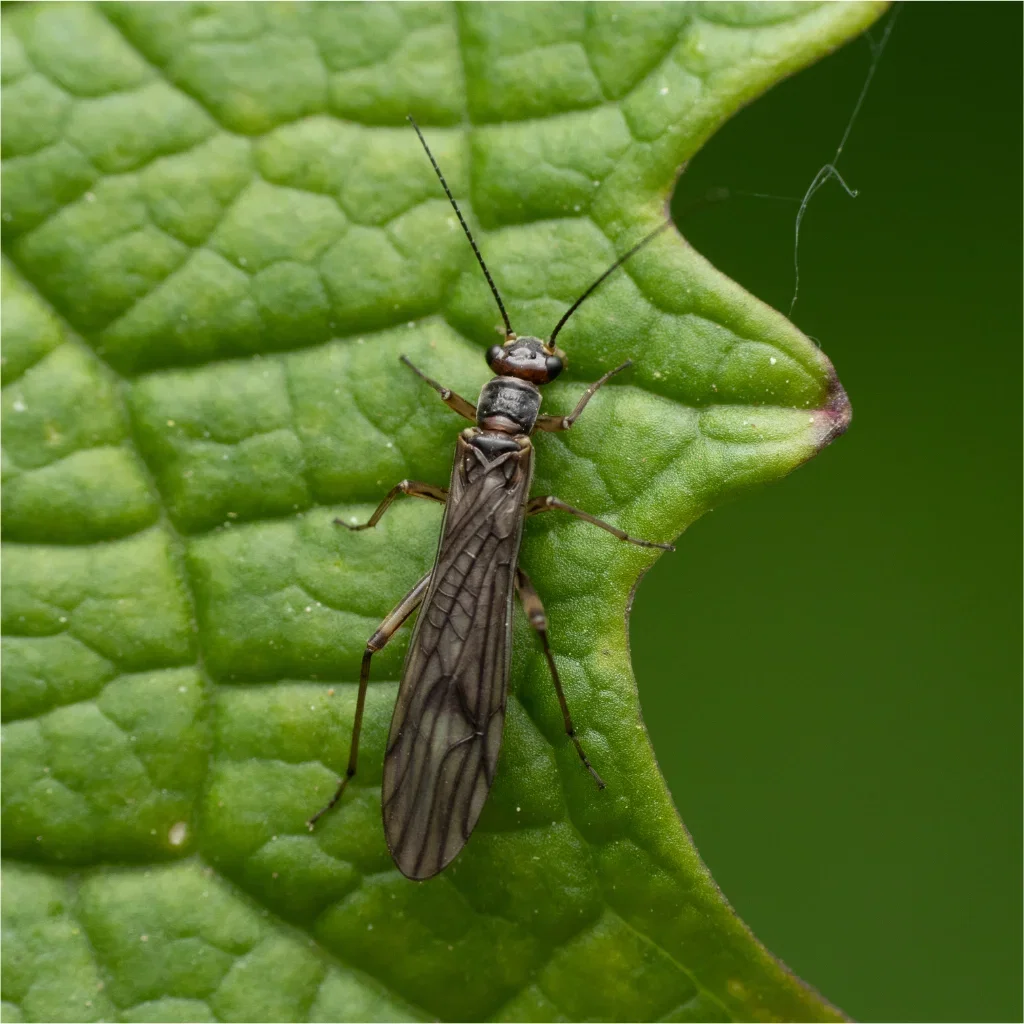
What are thrips?
Thrips (Thysanoptera) are small, thin insects that rarely grow longer than 1-2 mm. Adult thrips are often dark brown or black, but the larvae are light, almost yellowish-white. They are equipped with sucking mouthparts which they use to empty plant cells of their contents. They leave behind unsightly damage and can significantly weaken the plant.
Why do you get thrips in your home?
Thrips rarely appear by themselves. They are masters at sneaking into your home:
- New plants
This is the most common source of infection. Always isolate new plants for a few weeks. - Open windows and doors
Especially in summer, adult thrips can fly or blow in from outdoor plants, although indoor and outdoor thrips are rarely the same species. - Clothes and pets
They can attach themselves to your clothes or your pet. - Ideal conditions
Thrips thrive in a dry, warm climate. They are therefore often a bigger problem indoors, especially in winter when humidity is low due to heating.
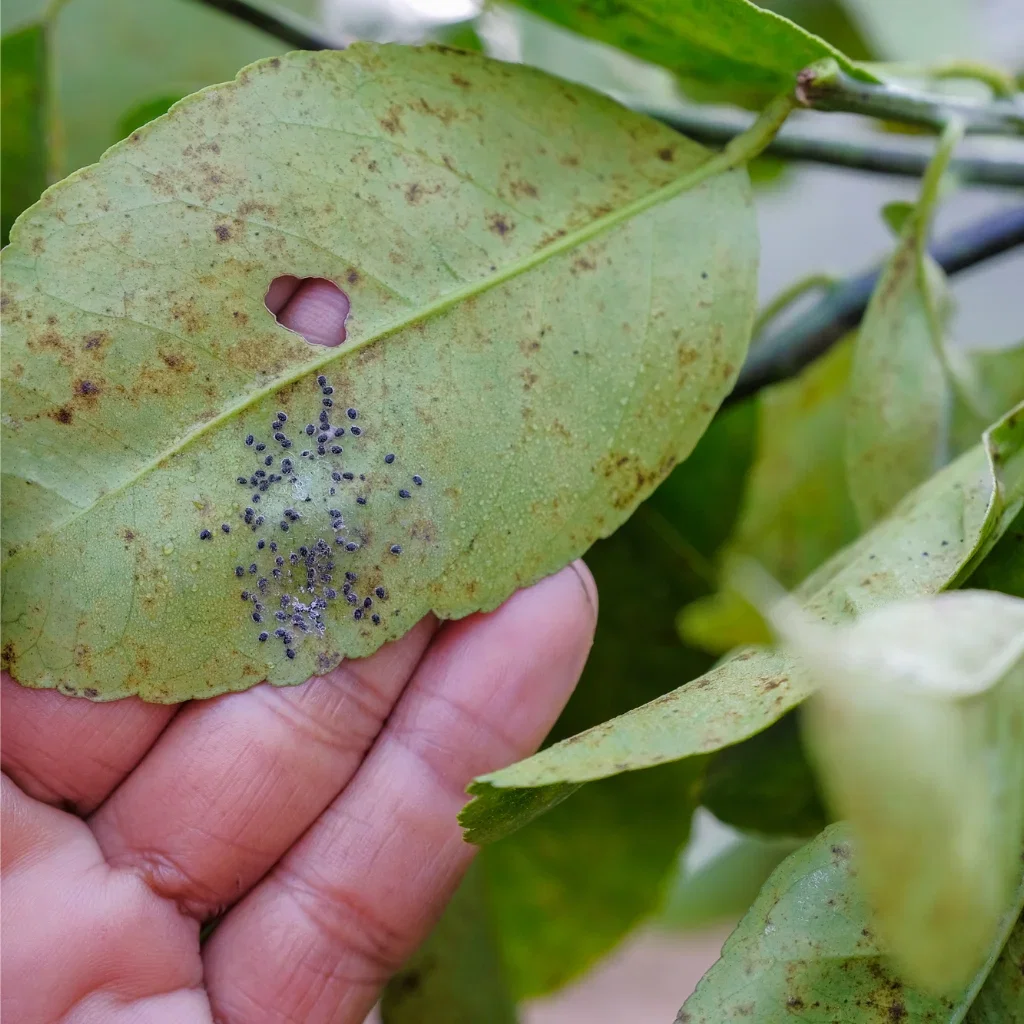
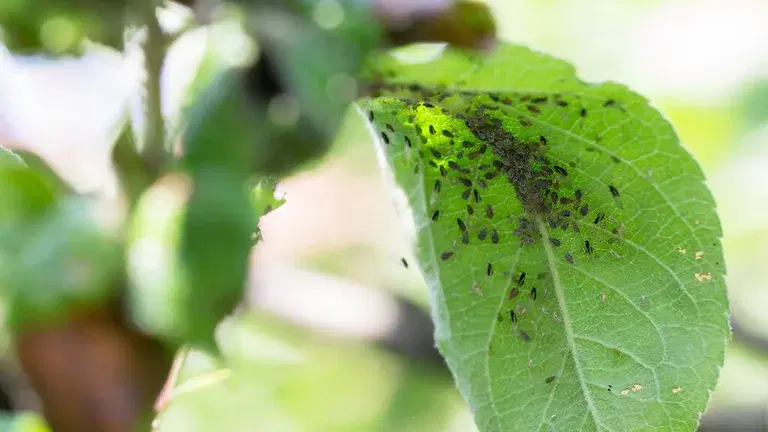
The thrips' excrement on the underside of a leaf is a clear sign that the plant has been attacked by the troublesome guest.
How to detect thrips infestation
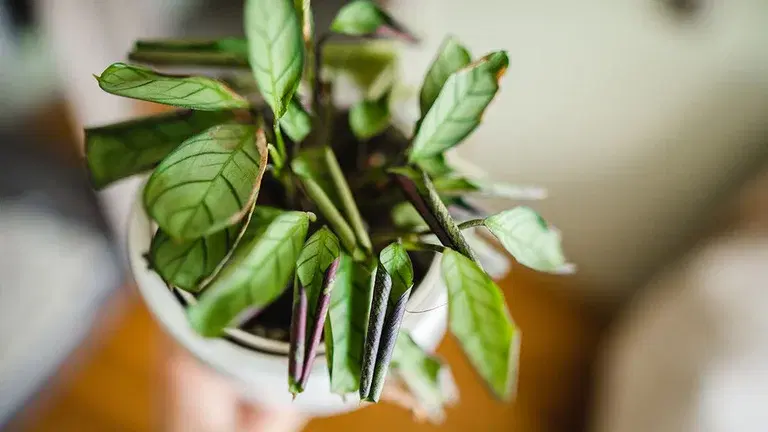
The first signs of thrips infestation are visible on the leaves. Look for silver or bronze-coloured, mottled areas, which occur where the thrips have sucked out the plant cells. This often causes new leaves to become curled or deformed in the event of severe attacks.
Another sure sign is tiny, dark brown to black dots on the underside of the leaves – these are the thrips' excrement. Finally, you can observe the pest itself: thin, dark insects that run quickly or jump on the foliage.
How do thrips affect different plants?
Thrips are relatively indiscriminate when it comes to choosing a host plant, but they do have some favourites:
- Thin-leaved plants
Plants with thinner leaves such as Ficus (e.g. Fiddle-leaf fig), Monstera, and Calathea often show damage quickly and clearly. - Pelargonium and Begonia
These are also vulnerable, and the damage is often seen as discoloration and reduced flowering. - Thick-leaved plants (less vulnerable)
Succulents and cacti can be attacked, but the damage is often less immediately visible. - General impact
Thrips suck out the nutrients and weaken the plant's ability to photosynthesize (energy absorption). This can lead to the plant becoming susceptible to other diseases and, in the worst case, dying.
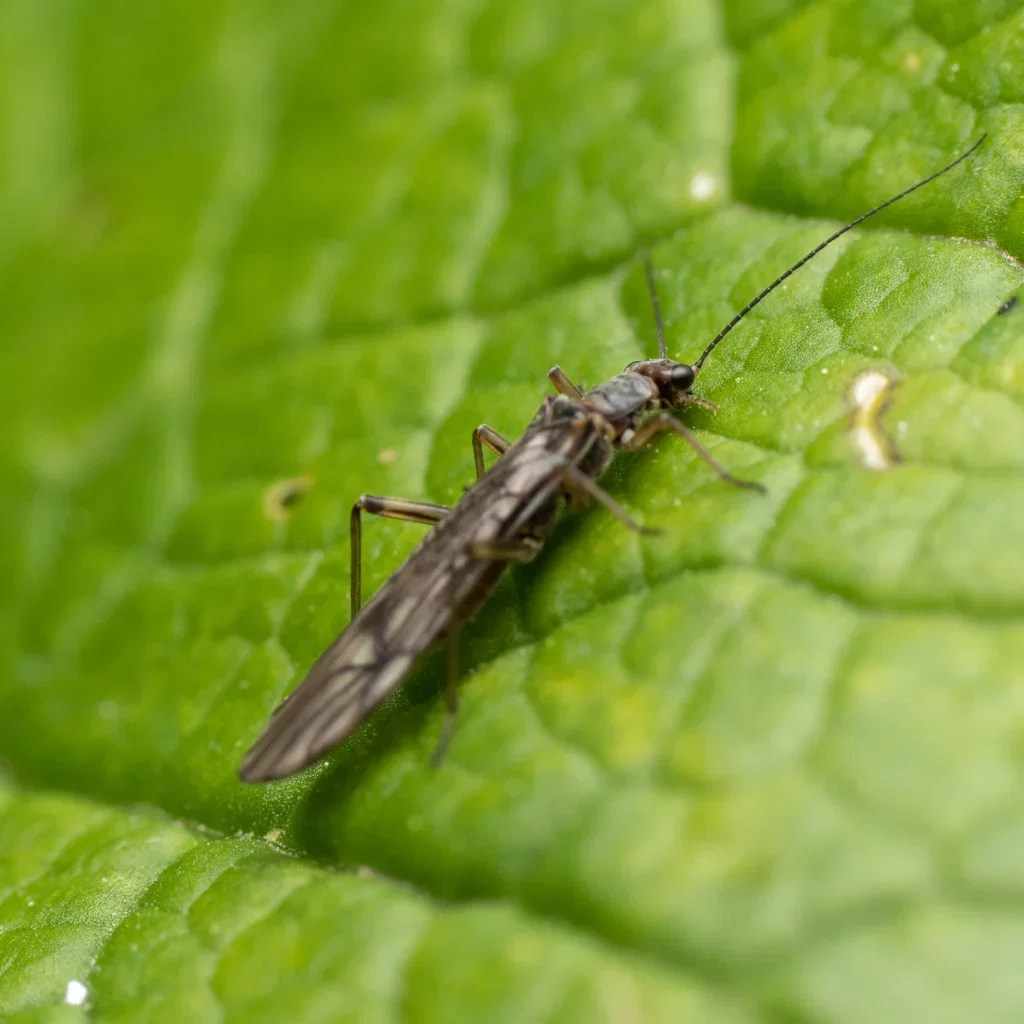
An adult thrips, ready to lay eggs. Adult individuals are often darker and fly when disturbed, which contributes to rapid spread between the plants.
How to get rid of thrips
- Thrips control requires patience and repetition. Start by isolating the infested plant immediately, and then rinse it thoroughly with a strong jet of lukewarm water to remove as many insects as possible from the leaves.
- An effective and environmentally friendly insecticide can be made by mixing 2 tbsp of vegetable oil, 3 tbsp of soft soap (or dish soap), and 2.5 dl of water in a spray bottle. Spray the mixture thoroughly over the entire plant, taking special care to cover the underside of the leaves. The treatment needs to be repeated approximately twice a week for three weeks to break the thrips' continuous life cycle.
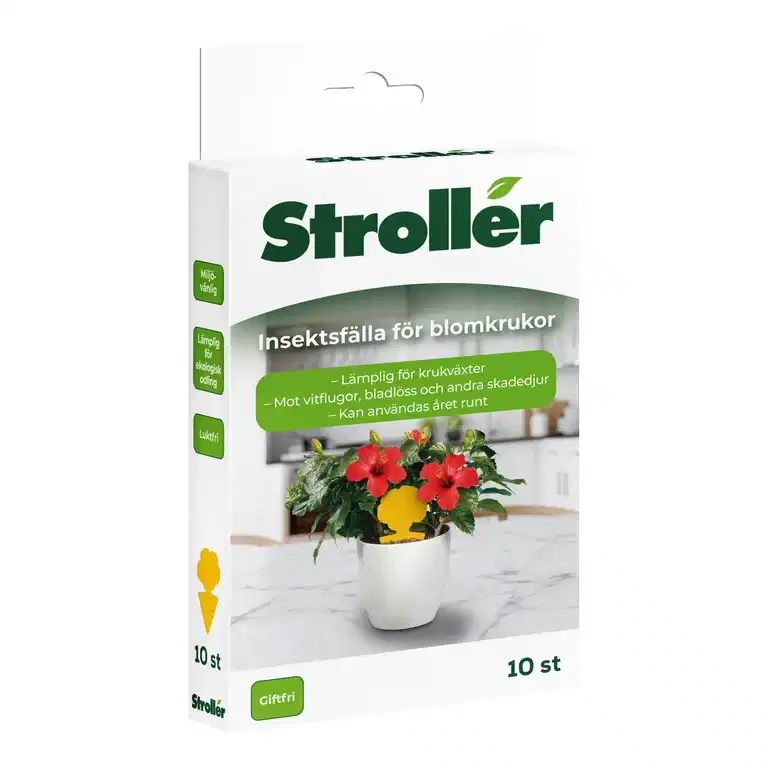
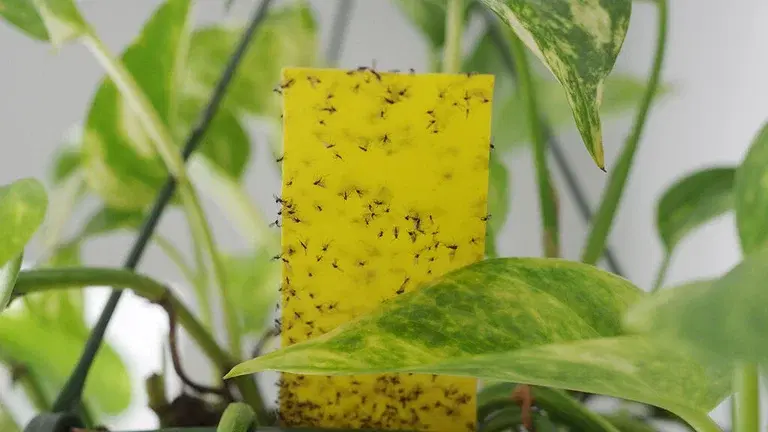
- Insect traps are also a very practical and effective method for dealing with thrips, and are simultaneously an environmentally friendly and non-toxic alternative to chemical sprays. They work by exploiting the fact that many harmful insects, including thrips, are attracted to the yellow colour of the traps. When the thrips fly towards the trap, they get stuck in the sticky glue.
Most common time of year
Thrips can attack all year round, but an increase in attacks is often experienced during the following periods:
- The winter half-year
The warm and dry indoor air, caused by heating, creates optimal conditions for thrips. Plants are also often under stress during this period due to low light, which makes them more vulnerable. - After purchasing a new plant
When new plants are introduced into the home (regardless of the season), the risk of infection is greatest.
Preventive tips: Increase the humidity around your plants (e.g. with a humidifier or by grouping plants) to make the environment less hospitable for thrips. Use yellow sticky traps to catch adult, flying thrips.
The reward is worth the effort
Fighting thrips requires patience, but remember that the effort is worth it! By being consistent with the treatment, you ensure that the thrips' life cycle is broken and that the plant gets rest. Hang in there, and you will soon be rewarded with healthy and fresh plants again.
Read more:
You are here: